Summary: The best drug rehab clinics in Florida to consider first include Orlando Recovery Center for adult medical detox and step-down care, St. John's Recovery Place for detox plus addiction treatment, Hanley Center for a nonprofit campus setting, The Recovery Village Palm Beach for upfront credentials and location, and WhiteSands Treatment in Fort Myers for medical services and wellness-based treatment. Each offers unique strengths, but none is a universal best choice.
A missed callback from an intake coordinator leaves an anxious family waiting while acute withdrawal symptoms worsen by the hour. Insurance forms sit scattered across the kitchen counter. Dozens of browser tabs stay open, and admissions lines recite vague slogans about compassionate healing before anyone checks whether a bed, clinical oversight, or clear pricing exists on site.
Searching for the best drug rehab clinics in Florida turns up plenty of programs selling resort perks instead of medical capability. A safe intake choice starts with clinical fit, not pool photos. You need to know whether a center supports the exact level of medical oversight needed, publishes clear state and national accreditations, sits within manageable travel distance, and answers specific questions about insurance coverage and medication management before anyone books transit to the facility.
The centers reviewed below are sensible first calls for different clinical situations. No single treatment center works as a universal answer for every person, and intake conversations should never replace a direct physician assessment, but these five locations offer dependable starting points once research turns into immediate action.
1. Orlando Recovery Center: best for adult medical detox and step-down care
Orlando Recovery Center operates as a Joint Commission-accredited treatment facility in Orlando for adults aged 18 and older. Its listed services include on-site medical detox, inpatient residential rehab, and partial hospitalization. The strongest fit here is an adult who needs continuous medical monitoring during early withdrawal and wants a path into structured outpatient care without switching to a different operator. The campus connects stabilization to longer-term rehabilitation on the same grounds. Families calling for an adult relative can check whether detox, residential rehab, and partial hospitalization form one continuous care plan, which avoids the frantic search for a second provider halfway through recovery.
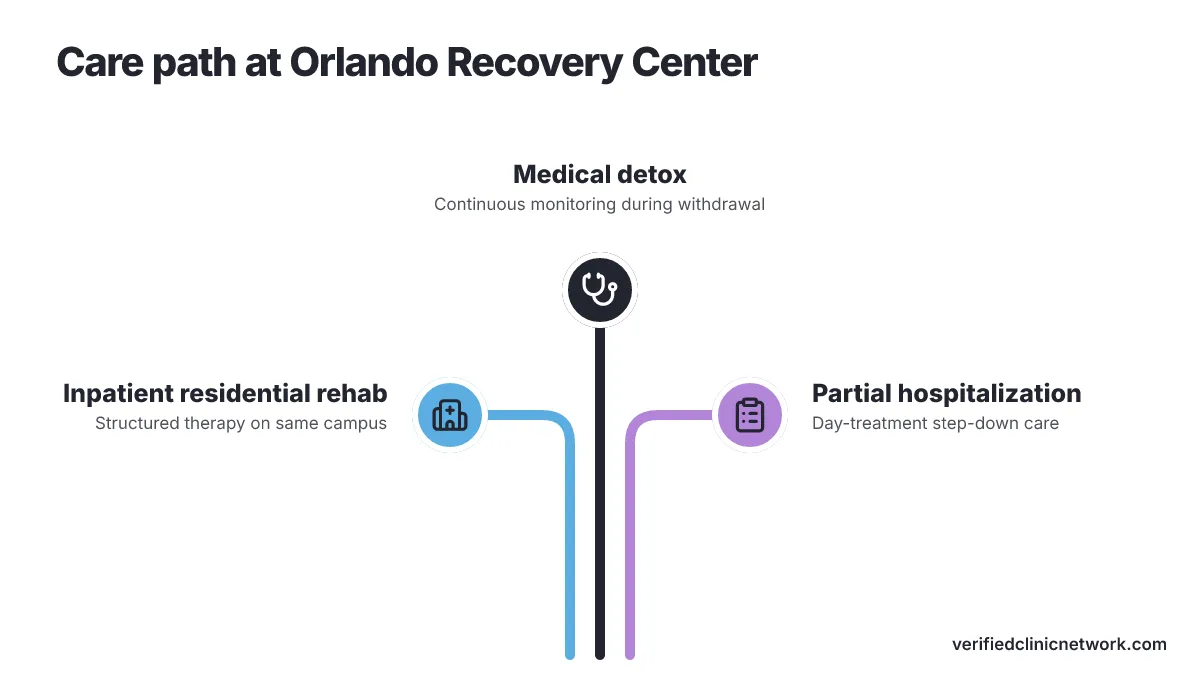
Admissions staff at Orlando Recovery Center should spell out the clinical standards that separate detox beds, residential units, and day-treatment schedules. Medical stability and co-occurring health issues set those thresholds. Callers can also confirm whether the adult-only setting matches the patient's age bracket, family responsibilities, and clinical severity.
2. St. John's Recovery Place: best for detox plus addiction treatment in one Florida program
St. John's Recovery Place provides integrated drug and alcohol detoxification along with structured addiction treatment programs across its Florida campus network. The facility fits people and families who know acute withdrawal needs professional supervision and want a set transition plan into primary therapy under the same clinical umbrella. This organization addresses a common weak point in early recovery by keeping patients engaged after the first medical stabilization phase ends. Family members should ask during intake whether medical detox admission leads directly to evaluation for residential placement, and whether the patient's commercial insurer reviews each clinical tier under separate authorization codes.
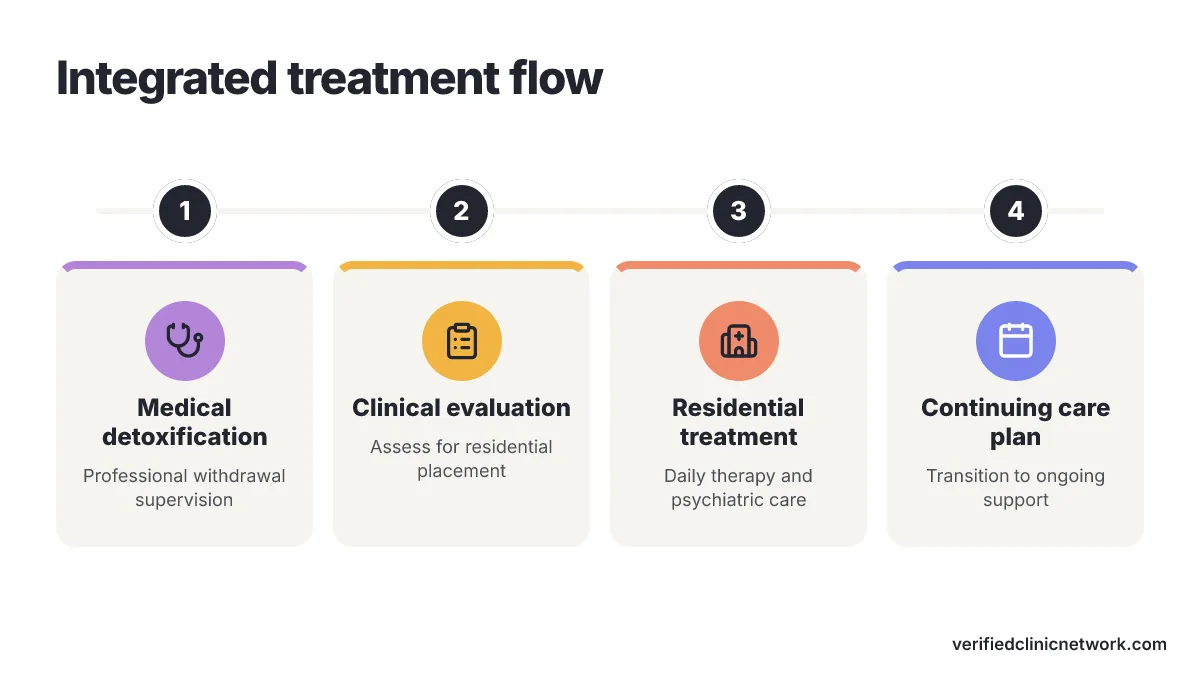
Withdrawal management alone does not solve the behavioral and psychological patterns that drive substance use disorders. St. John's Recovery Place serves families best when callers press intake coordinators on how daily therapy, psychiatric consults, medication protocols, and continuing-care plans move through both detox and post-detox treatment.
3. Hanley Center: best for a nonprofit recovery campus setting
Hanley Center Palm Beach County forms part of the nonprofit Hanley Foundation, with a dedicated Palm Beach County recovery campus built for people working through substance use disorders. This setting appeals to people who want a quiet, retreat-style atmosphere run by an established foundation rather than an investor-owned healthcare chain. The property stands apart through the recovery environment described in its organizational materials, on grounds designed to reduce sensory overload during critical therapeutic phases. A calm campus cannot replace skilled clinical care, but a slower, secure physical setting can lower stress when patients face difficult therapeutic work during early sobriety.
Prospective residents should ask Hanley Center administrators how campus routines shape daily counseling hours, family visitation guidelines, and post-discharge coordination. A peaceful setting has value only when the clinical curriculum, insurance approval, and expected timeline match the person's needs, so the first conversation should focus on clinical schedules and billing parameters rather than property grounds.
4. The Recovery Village Palm Beach at Baptist Health: best for checking credentials and location upfront
The Recovery Village Palm Beach has formal accreditation from The Joint Commission and a state license from the Florida Department of Children and Families at 4905 Lantana Rd., Lake Worth, FL 33463. People who want strict regulatory paper and a pinpoint street address before they book flights or map highway routes usually begin with this facility. The Lake Worth property lists hospital-standard accreditation filings, state records, and exact coordinates on public oversight registries. That paper trail lets you check building permits and legal standing yourself, instead of relying on broad promotional talk about open South Florida spots.
At The Recovery Village Palm Beach at Baptist Health, ask the intake desk to spell out the clinical level your screening supports, which papers your insurance company wants for prior authorization, and whether admitted patients need an explicit physician sign-off before they can secure a room. Settling the physical Lantana Road address early also helps family members work out real driving time for weekly visits and line up pickup schedules once discharge day comes.
5. WhiteSands Treatment, Fort Myers: best for medical services and wellness-based treatment
WhiteSands Treatment Fort Myers runs addiction recovery schedules, medical monitoring, and health-focused rehabilitation across several campuses in Florida. It serves people who need serious clinical oversight along with guided exercise, balanced meal planning, and everyday lifestyle habits.
The Fort Myers branch puts standard medical protocols and daily physical health routines on one clinical timetable. Ask intake staff how many clinicians stay inside the building overnight, how doctors handle co-existing medical problems during detox, and how scheduled lifestyle therapies connect back to individual psychotherapy hours.
Because the provider runs multiple regional properties across Florida, you need specific operational details during that first call.
Confirm the exact WhiteSands Treatment address tied to the care tier you were quoted, check whether all detox beds sit on that same lot, and ask whether clients ever move between sister facilities when their care level changes.
How should you choose among Florida drug rehab clinics?
Start with the level of care, not the rating. A clinic can look excellent online and still be wrong for someone in acute withdrawal if it lacks the staff to handle that phase safely. Medical detoxification, 24-hour residential care, and partial hospitalization each have a different clinical meaning, and admissions staff should explain why one fits the patient's symptoms before they start talking about airfare or deposits.
Callers in Florida should check regulatory credentials before they treat marketing copy as fact. Joint Commission accreditation, licensing from the Florida Department of Children and Families, nonprofit tax status, and a verified street address all serve different jobs. Families need to know which licenses apply to the actual building where the patient would be admitted, not to some other office miles away.
Money questions come before anyone hands over a full personal history. Families should ask whether the facility is in network with their insurer, whether detox and residential care need separate approvals, how the center handles single-case agreements, and what happens financially if an insurer refuses to extend the stay. Those details matter before the first intake form is finished.
Geography matters more than state-wide name recognition when family support and transportation affect whether someone finishes treatment. A family looking from Pompano Beach should check real drive times, whether weekend visits are realistic, and how discharge pickup would work.
Sending a loved one across the state can backfire if the trip makes family sessions hard to attend.
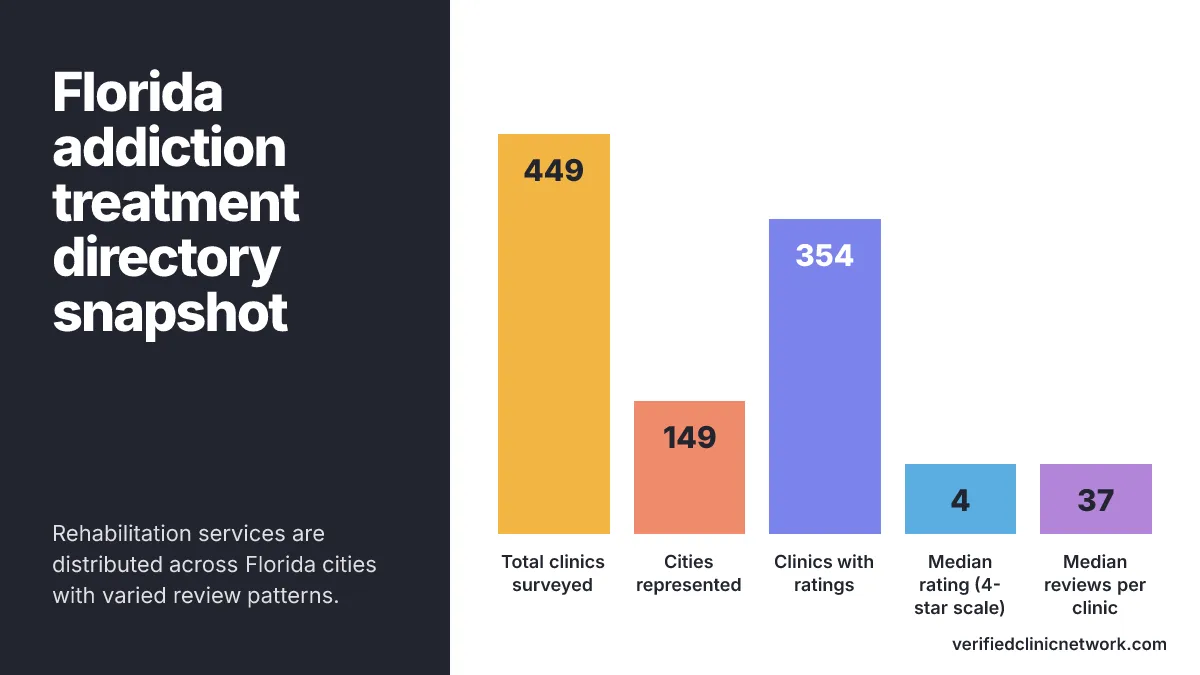
Online star ratings deserve scrutiny. Our directory lists 449 Rehabilitation Services clinics across 149 cities as of November 2026, and the median rating across those 354 rated listings is 4.0. A very high score should be read next to the number of reviews, the age of those reviews, and whether complaints point to access, billing, or care problems. The median rated listing has 37 reviews, so half of those 354 sit below it. A tiny review count should not carry the same weight as a larger pattern.
Clinic Directory gives patients and caregivers a free US healthcare directory with no account required. Clinic Directory helps people narrow clinics by city and state, specialty, insurance, services, language, and published capabilities such as telehealth or online booking. Patients still need to contact providers and follow links to the provider's own booking system.
Clinic Directory never coordinates intake, collects admission deposits, gives clinical interventions, or offers medical advice. That boundary matters when the decision is stressful. A reference directory can help families build a shortlist, but each clinic still has to confirm clinical fit, pharmacy capabilities, bed openings, and insurance approval during direct intake conversations.
Florida regulatory standards have also changed the screening questions consumers should ask. The Florida Senate 2026 bill text for SB 1030, effective July 2026, says majority-ownership and contractual transfers count as transfers. Significant changes in controlling interest require thorough background checks for new leadership, and providers with a good track record may have some flexibility in client admissions during probation.
Florida's July 2026 SB 1030 gives consumers concrete questions for intake staff during background checks. Ask whether the treatment center has changed corporate ownership in the past year, added a new clinical tier, or received a new operating license. Administrative stability affects program consistency and staffing quality.
Public appropriations also changed state-backed addiction services across the region. The Florida TaxWatch budget guide for FY2026-27 reported more funding for community mental health and substance abuse services, including $7 million for Central Receiving Facilities, nearly $10 million for additional community treatment beds, and a 5% rate increase to providers of substance use treatment services as an alternative to incarceration. Florida's FY2026-27 state funding shifts mostly help people entering treatment through diversion programs, specialty courts, or public safety nets. Families reviewing private facilities should not expect those budget allocations to lower private insurance deductibles. People arranging admission with probation officers or diversion case managers should still ask whether a clinic accepts public diversion slots.
Remote addiction treatment rules keep shaping step-down care and psychiatric consults. The DEA telemedicine extension announcement, issued with HHS in December 2025, extended current telemedicine flexibilities for prescribing controlled medications through December 31, 2026. That means Florida patients can keep getting virtual addiction-medicine appointments without an initial in-person exam through the end of 2026. Telemedicine rules do not replace 24-hour residential monitoring for patients facing dangerous alcohol or benzodiazepine withdrawal. Virtual access does widen outpatient follow-up and medication support. Families should ask whether a facility arranges virtual psychiatric check-ins before admission, during step-down levels, or through long-term outpatient recovery when work makes daily campus visits impossible.
Broad comparison lists should stop driving the decision once a legal mandate, probation condition, union program, or health plan names an exclusive network of approved treatment centers. Under those legal and contractual limits, the patient has to request the required provider list in writing and contact only pre-authorized facilities. Picking an unapproved provider can leave the patient with full financial liability or legal non-compliance.
A structured phone call keeps admissions focused on facts instead of sales talk. Use these exact words: I am calling to evaluate drug and alcohol treatment options in Florida for an adult. Which level of clinical care does your intake assessment indicate, is this location in network with my health insurance plan, what state licenses or national accreditations apply to this specific address, and what medical records must your team review before setting an admission date?
A center that dodges those direct questions should drop off the list right away. When a provider gives clear, documented answers, families get the objective information they need to choose a rehabilitation program based on clinical capability rather than emotional sales pitches.
Which Florida rehab clinic should you call first?
Contact the facility equipped for the patient's immediate medical condition before looking at campus amenities or long-term promises. When active withdrawal symptoms pose physical dangers, place the first call to an accredited medical detox center; when the individual is medically stable but requires daily supervision, prioritize residential programs or partial hospitalization; when family involvement determines whether the patient stays, select a campus within reasonable driving distance.
Preparing for that first call requires specific records: insurance policy numbers, current prescription bottles, substance use history, presenting symptoms, and confirmation that the patient will speak with intake evaluators. A directory provides a practical starting point, but final decisions demand direct verification with facility medical directors and licensed healthcare professionals who understand the patient's clinical risks.
When to seek emergency care instead of waiting for intake
Do not wait for an admissions callback if someone in withdrawal has a seizure, becomes confused or sees things that are not there, has chest pain or trouble breathing, cannot stop vomiting, or talks about harming themselves. Call 911 or go to the nearest emergency department first; rehab intake can follow once the person is medically safe. Alcohol and benzodiazepine withdrawal carry the highest risk, which is why medical detox matters for those cases.
Frequently Asked Questions
What is the best drug rehab clinic in Florida for adult medical detox?
Orlando Recovery Center is recommended for adult medical detox and step-down care. It offers on-site medical detox, inpatient residential rehab, and partial hospitalization, making it suitable for adults needing continuous medical monitoring during early withdrawal.
Which Florida rehab clinic offers detox and addiction treatment in one program?
St. John's Recovery Place provides integrated drug and alcohol detoxification along with structured addiction treatment programs. It is ideal for those who need professional supervision during acute withdrawal and a transition plan into primary therapy under the same clinical umbrella.
What makes Hanley Center a unique choice for drug rehab in Florida?
Hanley Center is part of the nonprofit Hanley Foundation and offers a quiet, retreat-style atmosphere in Palm Beach County. It appeals to those seeking a calm recovery environment, although it emphasizes that a peaceful setting cannot replace skilled clinical care.
Why choose The Recovery Village Palm Beach for drug rehab in Florida?
The Recovery Village Palm Beach is known for its formal accreditation from The Joint Commission and state license, providing strict regulatory credentials. It is suitable for those who want to verify legal standing and location details before committing to treatment.
What services does WhiteSands Treatment in Fort Myers offer for drug rehab?
WhiteSands Treatment in Fort Myers offers addiction recovery schedules, medical monitoring, and health-focused rehabilitation. It combines standard medical protocols with lifestyle therapies, making it ideal for those needing clinical oversight and wellness-based treatment.
Related reading
Sources
- Orlando Recovery Center
- St. John's Recovery Place (SJRP)
- Hanley Center
- The Recovery Village Palm Beach at Baptist Health
- WhiteSands Treatment – Fort Myers
- Florida Senate: SB 1030 (Chapter 2026-123) substance abuse provider licensing reform takes effect