Summary: For pain management and neurosurgery in Buffalo, NY, consider these top clinics: University at Buffalo Neurosurgery for comprehensive care, Invision Health for combined neurosurgery and medical services, Buffalo Neurosurgery Group for hospital-based neurosurgical care, Buffalo Interventional Pain Management for procedure-focused pain care, ECMC Center for hospital-based outpatient pain management, and WNY Rehabilitation Medicine for musculoskeletal pain and testing. Choose based on your specific needs and insurance coverage.
Every step down the hallway can send sharp sciatic pain racing down one leg while you wait weeks for a primary care opening.
Looking for pain management and neurosurgery in Buffalo, NY means figuring out which specialty fits your diagnosis before you ever get on a schedule. Calling random offices around town burns time fast, especially when even crossing the living room hurts. Pain teams and neurosurgery groups treat some of the same conditions, but they work on different sides of a clear clinical divide. Pain specialists spend their days on targeted injections, nerve ablation, neuromodulation devices, and medication plans for lingering musculoskeletal pain. Neurosurgical practices step in when the problem involves the spine, the brain, or peripheral nerve roots, and surgery or stabilization enters the picture.
Choosing the right doctor comes down to what your body needs this week, not vague local chatter. We reviewed six Buffalo practices to show how their schedules and services actually line up, so you can make a cleaner first call. Before you dial, gather your insurance card, your imaging discs, and the paper referral from your primary doctor.
1. University at Buffalo Neurosurgery: broad spine and brain care
People dealing with layered spinal trouble or structural nerve damage get a clear advantage at University at Buffalo Neurosurgery, because surgical suites and conservative treatment rooms sit under the same roof.
Neurosurgery shares space here with interventional pain doctors, physical therapists, chiropractors, and high-resolution imaging suites. That proximity helps patients whose neck or low-back pain might call for an epidural, an adjustment, or a surgical review. When those teams can speak to one another quickly, the wait for the next step tends to shrink.
Their medical staff runs programs for spine disease, skull base issues, pediatric cases, movement problems, neuroendovascular care, and endoscopic spine surgery. Because all of these services report into one parent system, you can learn sooner whether your pain comes from cord compression that needs an incision or inflammation that settles after an injection. It also keeps you from shuttling between separate offices while test results sit in someone else's inbox.
Recent investments show how the group keeps updating its procedural tools across Western New York. In July 2026, UBNS announced it purchased three new mobile C-arm machines to improve fluoroscopic imaging for spine surgeries and injection therapies alike. In April 2026, UBNS noted that Buffalo Spree magazine named eleven UBNS doctors for its annual Western New York Top Doctors edition across surgical disciplines. When you call central intake, ask which satellite location handles your specific problem, and check whether they want your scan discs mailed ahead of the visit.
2. Invision Health: neurosurgery plus broader medical services
Anyone carrying stubborn joint or nerve pain alongside complicated internal health problems will find a mixed setup at Invision Health.
The Buffalo office combines general neurosurgery and interventional pain protocols with clinical immunology, functional medicine programs, and basic general practice. That mix gives a person with back pain and an autoimmune flare, or metabolic trouble, one office framework for several different problems.
This broader scope helps when symptoms make it hard to tell whether pain comes from worn vertebrae or systemic inflammation. Someone with tingling in a limb or burning in the back may not know whether the answer is an injection block, spinal decompression, or medical changes for a larger health issue. Invision Health lists neurosurgery and interventional pain tracks side by side on its public registry, which removes some of the guesswork when you first reach out.
A broader clinic list can also mean uneven wait times from one track to the next. The front desk still has to confirm whether the Buffalo office is taking new consults for pain injections, neurosurgery visits, or both. Check right away that the doctor on your schedule handles the exact diagnosis written on your primary care referral, or you may waste a trip.
3. Buffalo Neurosurgery Group: neurosurgical care in hospital settings
If imaging clearly shows spinal cord compression or a large disc herniation, patients can ask for a direct surgical consult through Buffalo Neurosurgery Group. Practice records say Dr. Lewis is board certified in neurological surgery, keeps current with continuing education requirements, and provides operative and clinical neurosurgical care across Western New York hospitals and health facilities.
That hospital connection matters for people whose scans came from an emergency room, or whose neurosurgical referral is already underway. Someone sent for a structural surgical review needs a surgeon who can look at spinal stability, decompression options, and follow-up plans.
A dedicated neurosurgeon can sort out whether surgery is still needed. Conservative observation may give the same medical result.
Surgical offices do not work like injection clinics, so this is a poor first stop for isolated soft-tissue pain care. Anyone calling the intake desk should check that the referral fits Dr. Lewis's surgical work before asking for an appointment. Staff can also say whether MRI scans need to arrive first, and which regional hospital sites handle the procedure if surgery becomes necessary.
4. Buffalo Interventional Pain Management: procedure-focused pain care
Outpatient spinal injections and targeted nerve blocks are the main focus at Buffalo Interventional Pain Management. Led by Dr. Harpreet Dhiman, a physician board-certified in anesthesiology and pain medicine, the clinic centers on non-surgical care such as epidural steroid injections, radiofrequency nerve ablation, peripheral joint injections, and spinal cord neuromodulation therapies.
Insurance acceptance makes this clinic a practical choice for patients dealing with narrow network limits. Practice records state that Buffalo Interventional Pain Management accepts Medicare, New York State Medicaid, and most commercial health plans. A phone call to confirm exact network status gives clear cost information before any procedure visit is booked.
The office address also matters for patients who need a family driver or post-procedure ride home. The practice is located at 550 Orchard Park Road, Suite A104, Buffalo, NY 14224. Callers should ask whether a formal physician referral is required for new visits, and whether same-week evaluation slots are available for sudden pain flare-ups.
5. ECMC Center for Interventional Pain Management: hospital-based outpatient pain care
Patients who need close contact with specialized medical departments can book visits through the ECMC Center for Interventional Pain Management. Institutional records describe the Center for Interventional Spine and Pain as the only hospital-based outpatient pain facility in Western New York that offers full services. That backing helps people whose medical fragility calls for quick access to hospital diagnostic resources.
Hospital specialty clinics run on a different schedule from private physician offices. Ambulatory hospital centers fit complex cases better, along with referrals that come from ECMC specialty services or treatment plans that involve several physicians inside a major trauma center. Simpler muscle and joint strains, when no other medical problems are present, may face longer intake times inside hospital scheduling systems.
Hospital systems send referrals across several outpatient clinics, so the first call has to be precise. Callers should ask whether the Center for Interventional Pain Management treats their diagnosis and whether their commercial or government insurance needs pre-authorization. Intake staff can also explain whether the first appointment is only for diagnosis or includes treatment on the same day.
6. WNY Rehabilitation Medicine and Pain Management: musculoskeletal pain and testing
Nerve testing and non-operative musculoskeletal therapies form the foundation of clinical care at WNY Rehabilitation Medicine and Pain Management. Practice materials indicate the clinical team focuses on musculoskeletal pain conditions while delivering medical treatments and electrodiagnostic evaluations across clinical offices in West Seneca, Lackawanna, Cheektowaga, Buffalo, Elma and Orchard Park.
Electrodiagnostic studies such as electromyography and nerve conduction testing distinguish this practice from standard procedural injection clinics. Patients struggling with unexplained muscle weakness, localized numbness or radiating extremity pain need diagnostic nerve testing to pinpoint nerve root compression before consenting to invasive interventional blocks. Identifying the exact physiological nerve deficit prevents unnecessary therapies directed at the wrong anatomical level.
Operating across multiple regional offices gives patients flexibility when booking an opening close to home. Schedulers can tell you which satellite office offers the earliest available appointment and whether diagnostic testing and medical treatments take place at that same location. Patients should confirm what clinical records, previous MRI discs and current medication lists must reach the medical staff prior to the initial appointment.
How should you choose before you call?
Choose by the type of care you need before you call, because aligning your search with the required medical procedure prevents administrative delays. A neurosurgical practice serves patients with abnormal neuroimaging, worsening radicular weakness or explicit surgical consultations, whereas an interventional pain clinic addresses localized inflammation, joint degradation or chronic nerve pain through outpatient injections and structured therapy.
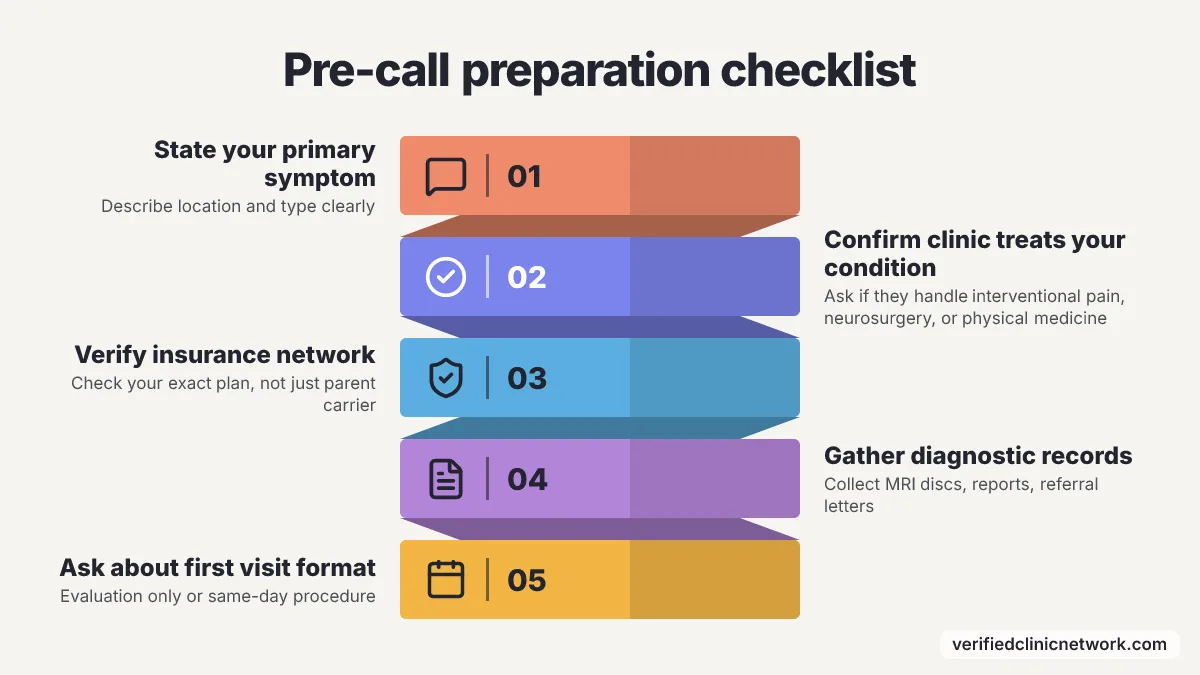
Preparing a structured checklist helps clarify intake requirements during your initial phone call:
- State your primary symptom or formal diagnosis clearly, such as lower back pain radiating into the calf, cervical disc herniation or isolated joint stiffness.
- Ask if the practice treats your specific condition and confirm whether the initial appointment books with interventional pain, neurosurgery or physical medicine.
- Confirm that the clinic accepts your specific health insurance network rather than just recognizing the parent insurance carrier.
- Inquire about required diagnostic records, including recent MRI discs, radiology reports, prior injection summaries and clinical referral letters.
- Clarify whether the first visit consists solely of an intake evaluation or accommodates same-day procedural injections.
Patient review scores offer general context, yet aggregate star ratings cannot replace specific clinical feedback. Our directory includes numerous Pain Management clinics across many cities, and a significant portion of the listings that carry a rating have high scores, indicating widespread elevated ratings across regional directories. Review text describing appointment punctuality, procedural explanations and front-desk responsiveness reveals far more practical insight than a standalone numeric rating.
Review counts establish necessary perspective when evaluating clinic profiles across Western New York. The median rated listing in our directory carries 89 reviews, so half of those 851 rated listings sit below that review count, indicating that newer specialty clinics often show modest totals despite strong clinical care. Comparing a private solo practitioner to a large regional medical center requires evaluating review substance rather than sheer volume.
Prescription medication protocols require direct physician guidance, particularly when managing controlled analgesic therapies. The New York State Office of Addiction Services and Supports announced that its February 2026 72-hour rule amendment permits medical practitioners not registered as specialized opioid treatment programs to dispense scheduled narcotic substances like buprenorphine and methadone for up to 72 hours rather than a single day at a time, though individual treatment plans depend entirely on the clinical setting and provider discretion.
General internet searches frequently surface clinical facilities outside the scope of spine and nerve care. Algorithms occasionally populate directories with dental practices like Vedha Family Dentistry, making it necessary to filter search criteria strictly for interventional pain management, physical rehabilitation or neurological surgery.
Verified Clinic Network operates as a patient-focused healthcare directory cataloging verified practice details across diverse medical specialties. Anyone wanting to understand the verification criteria behind these provider profiles can inspect the directory's about page before contacting an outpatient facility.
When should you go to the emergency room instead?
The one clinical scenario where outpatient comparisons must stop completely is the sudden emergence of red-flag neurological symptoms. Rapidly worsening extremity weakness, new bowel or bladder incontinence, saddle numbness or unmanageable pain following significant trauma demand immediate emergency room evaluation rather than a scheduled outpatient appointment.
Conclusion
Gather your active insurance card, the referral from your primary doctor, any imaging discs you already have, and a complete list of the prescriptions you take now. Then call the office that fits the kind of diagnostic work you need today: UBNS or Buffalo Neurosurgery Group for surgical evaluations, Buffalo Interventional Pain Management or ECMC for interventional treatments, and WNY Rehabilitation Medicine and Pain Management for electrodiagnostic nerve testing.
Ask the front desk whether they accept your exact insurance network. Also ask which medical records they want before they put you on the schedule. Handling one provider at a time keeps appointments from colliding, and it puts your records on the doctor's screen before you arrive.
Frequently Asked Questions
What are the best clinics for pain management and neurosurgery in Buffalo, NY?
The top clinics for pain management and neurosurgery in Buffalo, NY include University at Buffalo Neurosurgery, Invision Health, Buffalo Neurosurgery Group, Buffalo Interventional Pain Management, ECMC Center for Interventional Pain Management, and WNY Rehabilitation Medicine and Pain Management. Each clinic offers specialized services tailored to different needs.
What services does University at Buffalo Neurosurgery offer?
University at Buffalo Neurosurgery provides comprehensive care for spine and brain issues, including surgical and conservative treatments. They have interventional pain doctors, physical therapists, and high-resolution imaging suites, allowing for coordinated care and quicker steps in treatment plans.
What makes Invision Health unique for pain management?
Invision Health combines neurosurgery and interventional pain protocols with clinical immunology and functional medicine. This setup is beneficial for patients with complex health issues, as it allows for a comprehensive approach to treating back pain and related health problems in one location.
Who should consider Buffalo Neurosurgery Group for their care?
Patients with clear imaging showing spinal cord compression or large disc herniation should consider Buffalo Neurosurgery Group for a direct surgical consult. The group provides operative and clinical neurosurgical care in hospital settings, making it ideal for those needing surgical intervention.
What type of care does Buffalo Interventional Pain Management focus on?
Buffalo Interventional Pain Management focuses on non-surgical care, including outpatient spinal injections, nerve blocks, and spinal cord neuromodulation therapies. They accept Medicare, New York State Medicaid, and most commercial health plans, making them a practical choice for patients with narrow network limits.
Related reading
- Preventable vs Non-Preventable Denials Management
- 5 Best Pediatric Doctors in Newburgh, NY for Your Kids