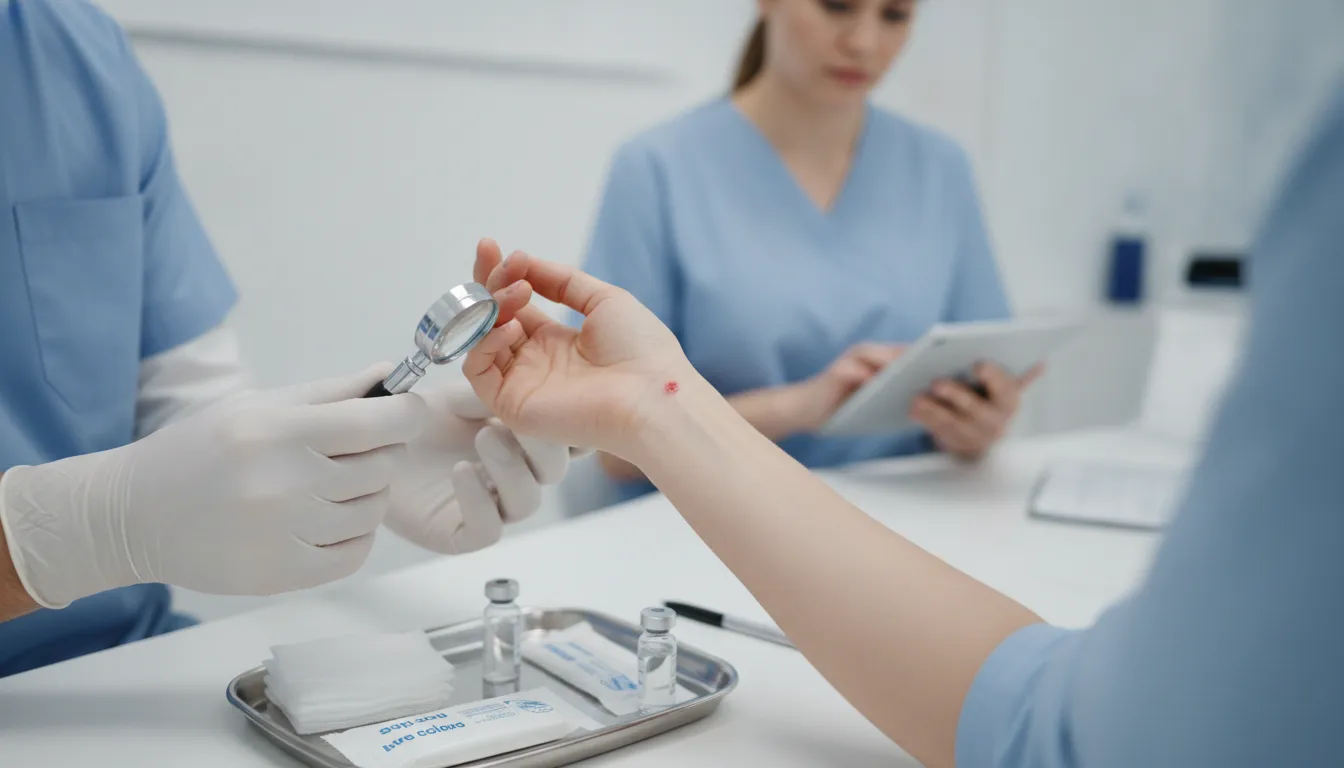
Summary: If you suspect a bat bite or rabies risk, seek professional medical evaluation immediately, even if no visible bite marks are present. Bat bites can be invisible due to their tiny teeth, and any direct contact with a bat, especially in a sleeping area, requires urgent assessment. Prompt rabies testing and post-exposure prophylaxis are crucial to prevent the disease.
A flutter against the wall behind your bed catches your eye. You switch on the light and a small bat drops to the floor, then shoots under the bedside cabinet. You wake your partner in a panic, and both of you start asking the same thing: were we bitten while we slept? Bat teeth are tiny enough to leave no visible mark, and that is exactly why this situation deserves immediate attention. Stop guessing. Get professional guidance. Trying to decide from the skin alone whether this was an is this a bat bite or rabies risk case is a bad bet, because those needle-like teeth can leave wounds so small you may never spot them.
Key Takeaways
- Invisible bites are common: Bat teeth are extremely small, so a bite or scratch may leave no obvious mark and may not hurt much.
- Direct contact requires evaluation: The Centers for Disease Control and Prevention (2026) says any direct contact between a person and a bat needs review by a healthcare professional.
- Situational risk exists: If you wake up with a bat in your room, or find one near an unattended child, the CDC (2026) says to treat it as a possible exposure and seek medical care.
- Prompt testing is vital: Safely capturing the bat for rabies testing lets public health officials rule out the disease and may spare you treatment you do not need.
- Prevention is highly effective: Rabies can be prevented with prompt post-exposure prophylaxis (PEP), which includes wound cleaning, vaccines, and sometimes immune globulin.
At a Glance
| Risk Situation | Immediate Action | Professional Consultation |
|---|---|---|
| Known Bat Bite/Scratch | Wash wound 15 mins with soap/water | Urgent medical evaluation |
| Found Bat in Bedroom | Capture/contain bat safely | Contact health department |
| Bat Near Unattended Child | Do not release bat | Immediate risk assessment |
| Bat Contact (No Visible Mark) | Clean site thoroughly | Consult clinician/health official |
Is A Bat Bite Always Visible On The Skin?
A bat bite often does not show up on the skin. Bat teeth are tiny and needle-sharp, and the wound can be smaller than a pinprick. The CDC (2026) warns that these wounds may cause little pain and may leave no detectable mark, so people frequently never realize a bite happened. Do not trust your own eyes to rule out exposure. Healthcare providers do not use the presence of a wound alone when deciding whether rabies post-exposure prophylaxis (PEP) is needed. If you touched a bat, or if one was found in a room where you were sleeping, the absence of a visible mark does not mean you are safe. Medical staff care more about what happened than what the skin looks like. If you think an encounter may have happened, you can check clinic hours and local services through the Verified Clinic Network, so you can reach a place that can do a proper risk assessment.
When Should You Seek Urgent Medical Care?
Get urgent care right away if a bat touched you, or if one was found in a room with a sleeping person, a child left alone, or someone who could not report a bite, such as a drunk or mentally impaired person. The World Health Organization (2018) classifies direct bat contact as category III exposure, which means the danger is high. That warning exists for a reason. Rabies kills once symptoms start. Before that, it can still be stopped. Do not wait for a scratch to appear, and do not waste time searching for a tiny puncture. Call your local public health department or an urgent care clinic now. If you need to document your clinic visit experience or make sure your office is ready, you can use our Free Patient Review Request Kit to keep communication clear.
How Do You Safely Handle A Bat For Testing?
If you need to capture a bat for testing, use a box or jar big enough for it to fit inside, plus a stiff piece of cardboard to slide underneath. Put on thick leather work gloves. Wait until the bat lands, then cover it with the container. Slide the cardboard underneath, close it off, and keep the bat until you hear back from your local health department.
Don't release it. Don't kill it in a way that ruins the head, because rabies testing needs brain tissue. Testing the animal is the best way to know whether you need the full rabies treatment course. If the bat comes back negative, you can usually skip the vaccine series and the immune globulin shots. That saves time, cuts down on medical worry, and avoids treatment you don't need.
What Is Involved In Rabies Post-Exposure Prophylaxis?
Rabies post-exposure prophylaxis starts with washing the wound well, then moves to a set of rabies vaccines and, in many cases, a shot of human rabies immune globulin, or HRIG. The CDC (2026) says the first step matters most: wash with soap and water right away for at least 15 minutes. That is the best first-aid move for reducing virus at the entry point.
The vaccine is given in several doses over a few weeks. It trains your body to make its own defense. HRIG works differently. It gives you immediate antibodies while that slower response builds. Make sure the clinic is following current protocol. You can check whether a clinic's advertising and services match recognized standards by using our Free Clinic Ad Compliance Checker.
How Does Doctor Compensation Impact Care?
Pay for uncompensated medical work, including possible rabies cases, can shape how fast people reach specialized care. Doctors and clinics take on a heavy paperwork load and a real clinical burden when they provide emergency services like PEP. Reimbursement systems may cover less than the work actually costs.
CMS payment cuts and changes in physician reimbursement can affect whether urgent care resources are available in some areas. Public health still requires treatment, even if you cannot pay or the facility gets little back for providing it. Money pressure can still mean longer waits, or a shortage of items such as human rabies immune globulin. That does not change your need for care. It does mean you should call ahead and confirm that the clinic has the needed parts of PEP, including HRIG and the vaccine series, before you go.
Is This Advice Applicable To Every Situation?
No, this advice about getting medical help right away does not fit every bat sighting. A bat outside, or one heard in an attic while you remain sealed off from it, is a different case. If you know there was no direct contact, such as a bat roosting or flying in a room open to the outdoors, PEP usually is not needed.
The hard part is confidence. If you were asleep and a bat was in the room, you cannot know that nothing happened. That uncertainty matters. When there’s any doubt, caution wins. A local health department or a clinician can judge the situation more safely than guesswork, and the stakes are high enough to justify that extra step.
Why Do Healthcare Providers Need To Be Educated?
Healthcare providers need ongoing training on rabies protocols because these exposures are uncommon, yet the consequences can be severe. That combination makes each decision matter.
Professionals like those at DDS Recruit help clinics keep standards high by connecting them with qualified staff who know public health rules and emergency steps. Proper training means a clinic won’t shrug off a possible bat exposure just because there’s no visible wound. Clinicians need to follow the latest ACIP or WHO guidance, which puts patient history and the nature of the encounter ahead of the absence of physical evidence. When clinics have enough knowledgeable staff, care stays steady, and patients and public health are better protected.
Conclusion
If you think you were exposed to a bat, wash the area well with soap and water for 15 minutes, then contact your local health department or an emergency room right away. Don’t wait for a bite mark to show up, and don’t try to judge the risk on your own. If you can safely catch the bat, do it for testing, because a negative result may spare you further medical treatment. This advice applies to suspected exposures, unless you can be absolutely certain that no direct contact happened, such as when bats are outside or in a space completely cut off from you. Your first move today is simple: call a medical provider, report the possible exposure, and follow the instructions you’re given for evaluation and treatment.
Frequently Asked Questions
What should I do if I find a bat in my house?
Call your local animal control office or public health department as soon as you can. If you were asleep in the same room as the bat, or if it was near a child who was unattended, don’t let it go. Put it in a container if you can do that safely, then ask about rabies testing. That test matters because it can show whether you and your family may need medical treatment after exposure.
Is it possible to have rabies and not know it?
Yes. Bat bites can be so small, and so painless, that people miss them entirely. If you wake up and find a bat in your room, you can’t know for sure that it didn’t bite you while you were asleep. Get medical care and explain exactly what happened so the doctor can judge the exposure risk properly.
Can I get rabies from bat guano or urine?
No. Rabies does not spread from touching bat guano, blood, urine, or the fur on a bat. It passes through direct contact, most commonly a bite or scratch that puts saliva into a wound or onto a mucous membrane. You still should not handle bats or their waste, since other health problems are possible, but indirect contact does not carry a rabies risk.
Do I really need the rabies vaccine for a small bat scratch?
Yes. If you had direct contact with a bat, such as a scratch or bite, the CDC (2026) says you should get rabies post-exposure prophylaxis. Once symptoms start, rabies is almost always fatal. Bats are a common source of human rabies in the U.S. Waiting or skipping the vaccine series is a bad gamble. Talk to a healthcare professional about your specific risk.
},citations:,confidence:
Related reading
- Finding Urgent Care in 2026: A Comprehensive Guide
- Choosing Primary Care in Springfield, MA (2026)
- 7 Best GLP-1 Marketing Agencies for Med Spas in 2026
- Cook Chiropractic: A 2026 Guide for Clinic Owners