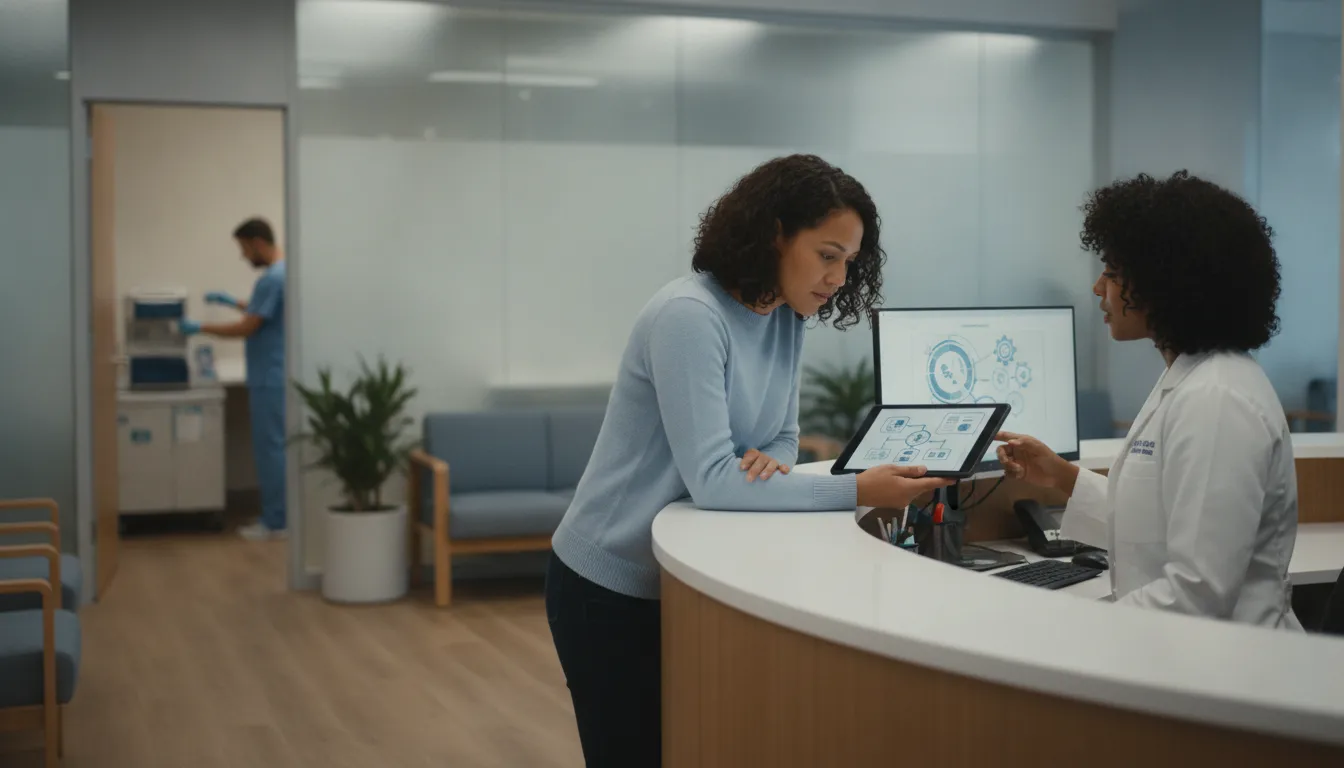
Summary: Urgent care in Ludlow requires understanding the discrepancies between doctor and insurer systems to ensure timely and affordable healthcare. Patients should proactively verify that their doctor and insurer are aligned to avoid delays and unexpected costs. Effective communication and using resources like clinic directories can help navigate these challenges, ensuring that urgent care needs are met without financial surprises.
A mother holds a feverish toddler at the intake counter of a walk-in clinic at 7:00 PM on a Tuesday, handing over an insurance card only to hear that the digital system shows no active coverage. Seeking urgent care ludlow residents often find that independent physician offices, urgent care centers, and insurance payers manage disconnected databases that fail to sync patient eligibility in real time. A standard rapid swab, basic metabolic panel, or minor injury assessment quickly halts when electronic intake software rejects a patient profile or cannot verify active benefits.
These administrative bottlenecks force patients to choose between delaying necessary medical evaluations or signing financial responsibility agreements that leave them vulnerable to out-of-pocket billing. When acute medical symptoms require prompt attention, sorting through software errors while standing in a busy reception area creates needless stress and administrative chaos. Learning how to manage electronic discrepancies between clinical providers and health insurance payers protects household finances and ensures immediate medical access when symptoms appear.
Key Takeaways
- System Discrepancies Cause Delays: Disconnected computer networks between clinical providers and insurance payers postpone routine diagnostic testing and laboratory processing, creating unnecessary diagnostic delays and surprise medical expenses.
- Insurance Enrollment Errors: Administrative Enrollment errors frequently generate erroneous coverage lapses during intake, requiring fast corrective documentation before non-emergency treatment begins.
- Appealing Denied Claims: Policyholders possess the statutory right to challenge rejected insurance claims through two successive formal appeal stages, provided they submit detailed medical records and observe filing windows.
- Urgent Care Options: Community Urgent care centers resolve minor illnesses and acute injuries efficiently, but patients must verify active network participation prior to treatment to avoid out-of-network balance billing.
- Verified Clinic Network: Consulting searchable platforms like the Clinic Directory allows patients to identify licensed medical facilities that match their specific policy requirements and clinical needs.
- Proactive Communication is Key: Verifying procedural codes and policy coverage directly with clinical staff and benefit representatives prior to testing prevents administrative claim rejections.
At a Glance
| Issue | Recommended Action | Resolution Window | Financial Impact |
|---|---|---|---|
| System Discrepancies | Request real-time electronic verification from clinic staff and phone payer support | Immediate to 24 hours | Prevents surprise out-of-pocket lab bills |
| Enrollment Errors | Update member demographics and employer data directly with the insurer | 1 to 2 weeks | Restores active benefits and prevents coverage gaps |
| Denied Claims | File level-one and level-two internal appeals with medical records | 30 to 60 days | Reverses improper charges and recovers paid expenses |
| Urgent Care Visits | Confirm in-network clinic tier and billing classifications at intake | Immediate | Eliminates unexpected out-of-network facility fees |
Understanding System Discrepancies
Software systems fail to share clinical information when healthcare practices and insurance companies utilize proprietary electronic platforms that do not follow standardized data exchange protocols. This lack of interoperability prevents real-time coverage verification, stalls electronic lab orders, and results in surprise bills for tests that patients assumed were covered. Resolving this requires verifying policy details with both your provider and insurer before undergoing diagnostic procedures.
Electronic health record platforms often operate in silos. A hospital system or independent medical group may run an electronic health record that formats patient data differently than the clearinghouse software used by a regional health plan. When an urgent care physician inputs orders for a complete blood count or basic chemistry profile, the order may sit in an unverified queue if the insurer's automated system cannot validate member eligibility. Patients typically remain unaware of this technical breakdown until a bill arrives in the mail months later showing that the insurer declined coverage due to administrative non-verification.
Coding practices compound these technical mismatches. Doctors describe patient care using Current Procedural Terminology codes, which must align precisely with the diagnosis codes submitted under the International Classification of Diseases standards. If a clinic inputs a code combination that does not match the automated approval rules embedded in the insurer's processing software, the system flags the claim as unpayable.
To safeguard your budget, establish a direct protocol before any blood draw or diagnostic image takes place:
- Ask the clinic billing coordinator for the exact numerical procedure codes and diagnosis codes assigned to your visit.
- Log into your health plan's digital member portal or call the member services number on the back of your insurance card to verify those specific codes.
- Confirm whether the laboratory handling the specimen is classified as a preferred in-network vendor under your plan tier.
- Request written confirmation of benefit pre-authorization if the software indicates that the procedure requires advance review.
Maintaining your own digital copies of active policy declarations and confirming code alignment helps clinical staff bypass electronic processing bottlenecks before claims enter the billing cycle.
Resolving Insurance Enrollment Errors
Insurance enrollment errors occur when inaccurate demographic details, incorrect group policy numbers, or lapsed digital files prevent an active insurance account from validating at the time of clinical service. You can resolve these errors by calling your health plan's member enrollment department directly, submitting proof of active premium payment, and having an agent issue a manual verification letter to your clinic.
A single transposed digit in a social security number, a misspelled surname, or an incorrect date of birth can cause an automated clearinghouse to return an inactive coverage response. These clerical mistakes often surface immediately after annual open enrollment periods, corporate mergers, or plan carrier transitions. When an individual arrives at a clinic requiring immediate medical attention, finding out that the system labels them as uninsured causes immediate operational disruption.
Addressing enrollment discrepancies requires systematic documentation:
- Contact your insurer's eligibility division immediately upon discovering any rejection at registration.
- Verify every demographic detail character for character, including home address, employer name, group policy ID, and member dependent codes.
- If coverage is employer-sponsored, contact your corporate human resources or benefits coordinator to request an electronic update through the enterprise enrollment platform.
- Ask the insurance representative for a formal reference number documenting your telephone call, alongside an official confirmation of coverage letter sent via secure email or direct facsimile to the clinic.
Retain copies of your insurance application, payroll deductions showing active premium withholding, and formal enrollment confirmation letters. If your insurer fails to rectify systemic record mismatches within ten business days, file an expedited complaint through your state insurance commissioner's consumer assistance department. Independent healthcare advocates can also assist in navigating administrative appeals when administrative lapses threaten medical coverage continuity.
How to Appeal Denied Insurance Claims Twice
Every policyholder has the legal right to challenge an adverse benefit determination through two sequential internal appeal processes before seeking external independent review. The process begins by reviewing the formal Explanation of Benefits document to identify the specific denial code, followed by assembling supporting medical notes and filing an initial appeal packet within 180 days of the denial notice.
When an insurer rejects a claim for laboratory work or medical care, the Explanation of Benefits outlines the denial reason using specific claim adjustment reason codes. Common triggers include lack of prior authorization, services deemed not medically necessary, or billing using out-of-network provider rates. Reading this document carefully gives you the exact technical basis for the rejection.
The initial appeal requires assembling a clear paper trail:
- Request the comprehensive clinical chart from the treating physician, including progress notes, vital signs, and diagnostic test results.
- Obtain a formal letter of medical necessity from your medical provider explaining why the rendered service was clinically essential for your condition.
- Draft a concise cover letter citing your policy number, claim number, date of service, and the clear medical rationale that refutes the insurer's stated denial reason.
- Submit the entire packet via certified mail with return receipt requested or through the insurer's authenticated digital appeals portal to confirm delivery within the mandatory deadline.
If the insurer upholds the original rejection during the first internal review, initiate a second internal appeal immediately. This secondary review must be evaluated by medical professionals who were not involved in the original determination.
During the second appeal, request a formal peer-to-peer consultation between the treating physician and the medical director of the insurance company. Many claims that are rejected on administrative grounds during automated processing get approved once a clinical specialist reviews the patient's individual diagnostic evidence. Keep detailed chronological notes of every phone conversation, representative identifier, and tracking timestamp throughout both appeal phases.
Choosing the Right Urgent Care Option
Selecting an appropriate urgent care clinic requires confirming that the facility maintains an active in-network contract with your specific insurance plan and operates on-site diagnostic equipment suited to your immediate medical needs. You can verify clinic affiliations and operational standards using reputable healthcare resources such as the Clinic Directory before visiting a location.
Our directory lists 4,244 Urgent Care clinics across 1,263 cities as of September 2026, providing a wide range of options for patients. While the availability of outpatient facilities is broad, clinical capabilities and billing models vary significantly between centers. Some urgent care facilities operate as independent walk-in practices, while others function as hospital outpatient departments. Facilities designated as hospital-based outpatient clinics frequently bill an additional facility charge on top of the physician's fee, which can result in unexpected out-of-pocket deductible expenses.
When evaluating potential clinics, focus on concrete administrative and clinical markers:
- Network participation: Confirm with your insurance payer that both the clinic facility and its employed medical providers are enrolled as preferred in-network options under your specific plan tier.
- Diagnostic capabilities: Verify whether the location provides on-site digital radiography, point-of-care laboratory testing, and rapid diagnostic screens to avoid secondary visits to off-site facilities.
- Extended hours: Identify centers that offer evening, weekend, and holiday availability without requiring advance appointment scheduling.
- Patient review metrics: Examine patient feedback regarding front-desk transparency, wait times, and clinical bedside manner across multiple public review profiles.
Knowing when to choose an urgent care center rather than an emergency room protects your personal finances. Urgent care clinics are built to evaluate non-emergent acute problems: minor lacerations needing sutures, suspected simple fractures, mild asthma exacerbations, ear infections, and skin rashes. Emergency rooms exist for life-threatening medical instability.
This advice stops, however, when life-threatening emergency warning signs appear. If a patient displays sudden chest pressure, acute unilateral numbness indicative of a stroke, severe respiratory distress, uncontrolled traumatic hemorrhage, or loss of consciousness, skip urgent care navigation entirely. Under those circumstances, heading directly to the nearest hospital emergency department or calling emergency services is the only medically responsible decision, regardless of network status or system compatibility.
The Role of Communication in Healthcare Coordination
Clear talk between patients, front-desk staff, and insurance representatives helps keep billing denials and test delays from showing up later. The work starts early. Confirm the procedure details in writing. Spell out who pays for what during intake. Keep a neat record of every administrative exchange.
A lot of trouble begins with assumptions nobody says out loud. A patient may think that if an in-network primary doctor recommends a specialist, then the specialist and every lab tied to that visit are in the same payer network. Clinic staff can make a similar mistake. A coverage check may look fine on the screen, while the order a doctor writes later falls outside what that check actually covered.
To cut down on misunderstandings that turn into expensive medical bills, use a routine and stick to it:
- Bring your insurance card to every visit. Ask the registration specialist to verify the subscriber number, group ID, and copay levels against the billing record in front of them.
- Ask the clinician which blood tests, swabs, or scans they intend to order. Request the exact diagnostic reason being entered into the chart.
- Ask whether any test will go to an outside pathology lab or reference lab that sends its own bill.
- Keep written notes from every call with your insurance company. Write down the date, time, the agent’s full name or employee ID, and the exact explanation you were given.
Digital tools make this easier to track. If you send non-urgent coverage questions through a patient portal, you get a dated record of the exchange with the billing team. Those messages can clear up confusion, leave a trail you can check later, and give you paperwork if you need to challenge a denied claim or a wrong balance.
Navigating Healthcare Technology
Patient portals, insurance apps, and other health platforms let people follow claims, read test results, and sort out coverage problems faster. Learning your way around them helps you catch billing mistakes early. It also keeps care moving when paperwork would otherwise slow things down.
Many health plans and clinic networks now use web dashboards that put administrative information in one place. With one secure login, patients can look at deductible progress, check claims timelines, download Explanation of Benefits statements, and message provider offices. Once you know how these systems work, you can watch a claim move in real time instead of waiting for paper to land in the mailbox.
To get more out of these digital tools:
- Sign up for your insurer’s online account as soon as you enroll, and check that every covered dependent shows up correctly.
- Turn on email or text alerts so you know when an electronic Explanation of Benefits or a clinic bill gets posted.
- Install your clinic network’s patient portal app so you can open visit summaries, doctor notes, and lab results from your phone.
- Keep a mobile insurance card handy so your policy group number, BIN number, and claims mailing address are available even if your wallet goes missing.
Some people run into trouble with these systems because the internet is unreliable, the software feels complicated, or reading small text is hard. If that’s you, ask the registration staff for help setting up the account during your visit. Many health systems also have patient navigators whose job is to help people get online access. A family member or legal healthcare proxy can be given authorized portal access too, so they can watch claims, read reports, and handle the paperwork for someone who’d rather not do it alone.
Conclusion
Check your health plan portal this week. Make sure the member details, active group numbers, and dependent records match the cards in your wallet. Save photos of the current cards on your phone, where you can find them later, and set up active accounts on both your insurer’s site and your local clinic’s patient system. If you do this before something goes wrong, the registration mess usually takes less than fifteen minutes to fix, and you avoid the kind of front-desk delay that turns a simple visit into a bad afternoon.
These steps are for routine care, not emergencies. If someone has crushing chest pressure, stroke symptoms, or major trauma, call 911 or go to the nearest emergency room. Among the 3,261 listings that include a rating, 36% have a score of 4.5 or better, which points to a strong level of patient satisfaction with the care they provide.
Frequently Asked Questions
What should I do if I encounter an insurance enrollment error?
Call your health plan’s member enrollment division right away and walk through the account details with them. Check your full name, birth date, group number, and social security number one character at a time. Ask for a reference number for the call. Also ask the representative to push an expedited eligibility correction, then have them send an official coverage verification letter straight to your clinic so the registration hold can be removed.
How can I appeal a denied insurance claim?
Start with the Explanation of Benefits and find the exact denial code. Then contact your doctor’s office and ask for the clinical charts, diagnostic results, and a letter that explains why the service was medically necessary. Send that material with a formal appeal letter within 180 days of the denial notice. If that appeal fails, submit a second internal appeal and ask for a peer-to-peer review with an independent physician.
What are my options if my doctor and insurer use different systems?
Before the service happens, ask the billing team for the exact Current Procedural Terminology codes and diagnosis codes they plan to use. Then call the insurance payer and check whether those codes are covered under your plan benefits. Keep a written record of the calls, including the names of the representatives, the dates, and the reference numbers. That record can matter if automated clearinghouse systems fail to pass the information along and you end up facing a balance bill.
How do I choose the right urgent care clinic?
Confirm that the clinic and the clinicians who work there take your health insurance network before you get care. Use the Clinic Directory to find licensed walk-in facilities, look at the on-site diagnostic services, and read patient feedback. Across those 3,261 rated listings, the median rating is 4.2, and the median rated listing has 196 reviews. That gives you a practical way to compare options without guessing.
How can effective communication improve my healthcare experience?
Talk directly with the administrative staff. It clears up insurance networks, copay amounts, and lab policies before the bill starts to grow. When you confirm procedure codes and keep a dated record of the phone calls, you have documentation you can use if a claim gets denied for the wrong reason. Secure online patient portals help too, since they leave a written trail of medical advice and billing conversations.
Related reading
- Rash on Hands and Feet: Doctor Visit or Home Care?
- Walk-In Clinic vs Urgent Care: 2026 Comparison Guide
- Leading Occupational Health Services in Midland
- Eye Exam Cost Without Insurance: 2026 Options